Elena Wolf · 8 October 2026
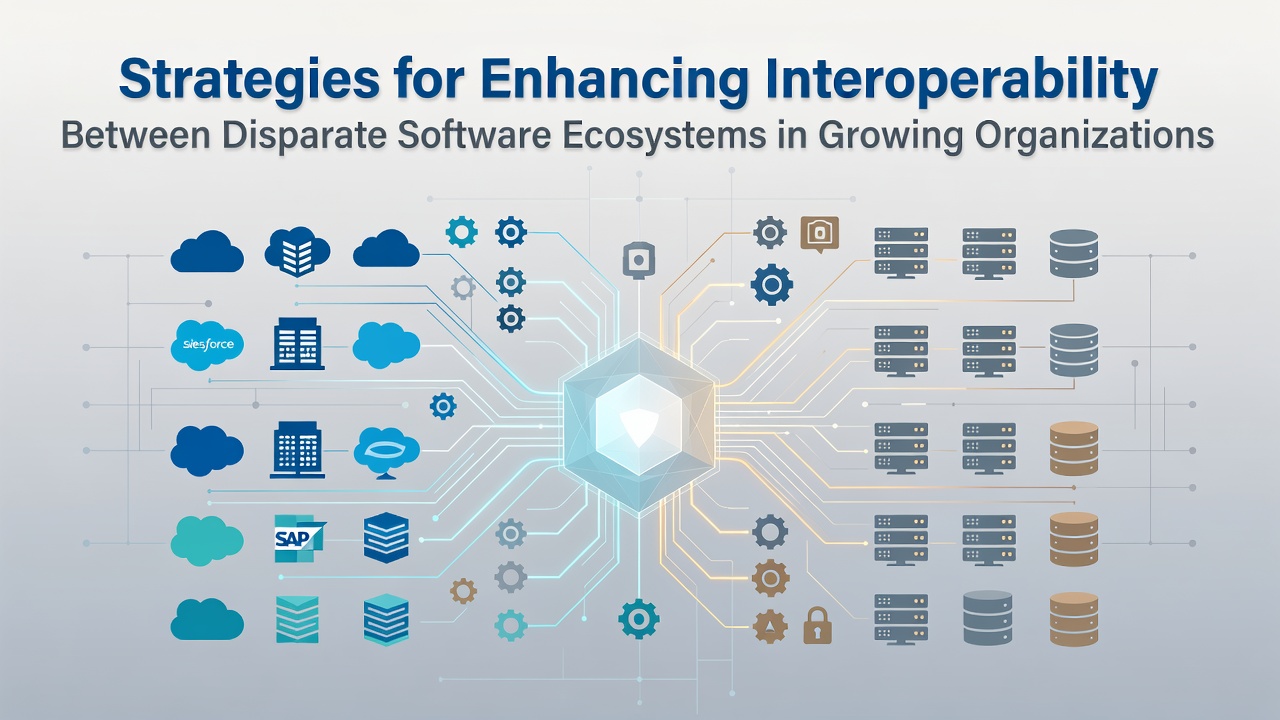
Strategies for Enhancing Interoperability Between Disparate Software Ecosystems in Growing Organizations
Organizations that expand rapidly often inherit multiple software platforms from acquisitions, departmental choices, and legacy vendors, and these systems rarely communicate without deliberate effort. Research from government technology agencies shows that data silos form when applications built on different architectures cannot exchange information in real time, which slows decision cycles and increases manual reconciliation tasks. Experts tracking enterprise IT deployments note that successful interoperability starts with mapping every data flow, identifying duplicate records, and documenting the protocols each ecosystem already supports before any integration work begins.
Mapping Existing Systems and Identifying Friction Points
Teams begin by creating a comprehensive inventory that lists every application, its data formats, authentication methods, and update frequency, and this inventory reveals where mismatches occur most frequently. Figures from North American digital transformation reports indicate that organizations completing such audits before integration projects reduce project overruns by aligning technical requirements with business processes early. Observers who have studied fast-growing firms point out that the audit phase also uncovers hidden dependencies, such as custom scripts that move files between systems on schedules that conflict with newer cloud services.
Adopting Open Standards and APIs
Once the landscape is clear, many organizations shift toward open standards that allow different platforms to exchange structured data without custom connectors for every pair of systems. According to NIST interoperability guidance, consistent use of RESTful APIs and JSON schemas enables modular upgrades because each ecosystem can evolve independently while maintaining compatible interfaces. Data from European public sector programs further reveals that governments enforcing common data exchange formats across vendor products achieve faster onboarding of new tools compared with environments that rely on proprietary bridges.
Deploying Middleware and Integration Platforms
Middleware layers sit between ecosystems and translate messages, manage queues, and enforce security policies, which reduces the need for direct connections that become brittle over time. Industry analyses from Canadian federal innovation reports show that organizations adopting enterprise service buses or lightweight integration platforms cut maintenance hours significantly once the initial configuration stabilizes. Those who have implemented these layers note that monitoring tools built into modern middleware also provide visibility into latency spikes and failed transactions across the entire network.

Addressing Security and Compliance Requirements
Interoperability projects must incorporate encryption, access controls, and audit trails from the outset because data crossing ecosystem boundaries faces additional exposure risks. Research published by Australian government digital economy initiatives indicates that organizations embedding zero-trust principles into integration architecture experience fewer incidents during scaling phases than those treating security as a later add-on. Compliance teams often reference frameworks that require logging of every data transfer and regular penetration testing of API endpoints to satisfy both internal policies and external regulations.
Establishing Governance and Change Management
Governance structures define who approves new integrations, how versioning occurs, and what metrics determine success, and these structures prevent ad-hoc connections that undermine long-term stability. Studies from academic research centers in Asia-Pacific regions demonstrate that organizations with cross-functional integration councils maintain higher system uptime because decisions incorporate input from security, operations, and business units simultaneously. Training programs that accompany governance updates help staff understand new workflows and reduce resistance that can stall adoption of shared standards.
Monitoring Performance and Iterating
Continuous monitoring tracks throughput, error rates, and response times across all connected systems, and alerts surface problems before they affect end users. Reports compiled by international standards bodies show that dashboards aggregating metrics from multiple ecosystems allow teams to identify bottlenecks quickly and prioritize fixes based on actual usage patterns rather than assumptions. As of October 2026, several large-scale deployments are testing automated remediation scripts that adjust routing rules in response to detected anomalies without manual intervention.
Conclusion
Organizations that treat interoperability as an ongoing program rather than a one-time project maintain flexibility as they grow and acquire new tools. Evidence gathered from multiple regions confirms that combining thorough system mapping, open standards, middleware, security controls, and governance produces measurable improvements in data accessibility and operational efficiency. The approaches outlined here provide a repeatable path that adapts to changing technology stacks while supporting business expansion.