
Eden Washington · 10 September 2026
Reconfiguring Security Layers in Collaborative Digital Workspaces After Major System Overhauls
Experts observe that organizations frequently encounter the need to reconfigure security layers once major system overhauls conclude, since these updates alter underlying architectures in collaborative digital workspaces where multiple users interact with shared resources in real time. Data from industry reports indicate that such overhauls often involve migrations to new cloud infrastructures or integration of advanced collaboration tools, which in turn expose gaps in authentication protocols and data segmentation practices. Research indicates that without targeted adjustments, these changes can lead to increased vulnerability windows lasting several weeks post-implementation. In September 2026, regulatory bodies across multiple regions released updated guidelines on post-overhaul security assessments, emphasizing the importance of layered defenses in environments that support simultaneous editing, file sharing, and real-time communication among distributed teams. Those who manage enterprise systems note that the process begins with a comprehensive audit of existing controls, mapping how each layer interacts with the revised platform components.Evaluating Access Management Changes
Analysts report that access management forms the foundation of any reconfiguration effort, because system overhauls commonly replace legacy identity providers with newer federated systems or zero-trust architectures. Studies conducted by academic institutions show that organizations which map user permissions against new role definitions achieve more consistent enforcement across collaborative tools. Observers note that this mapping requires cross-referencing activity logs from before and after the overhaul to identify orphaned accounts or excessive privileges that persisted through the transition.
What's interesting is how multi-factor authentication configurations shift during these periods, since newer systems often support additional verification methods such as hardware tokens or biometric checks that were unavailable previously. Figures from government cybersecurity centers reveal that proper alignment of these methods with workspace permissions reduces unauthorized access attempts by measurable margins in the months following implementation.
Updating Encryption and Data Segmentation
Encryption protocols demand immediate review after overhauls because data in transit and at rest may now traverse different network paths or storage systems. Researchers discovered that collaborative workspaces handling sensitive documents benefit from end-to-end encryption upgrades that match the new infrastructure's capabilities, and this often involves rotating keys while maintaining uninterrupted access for authorized participants.
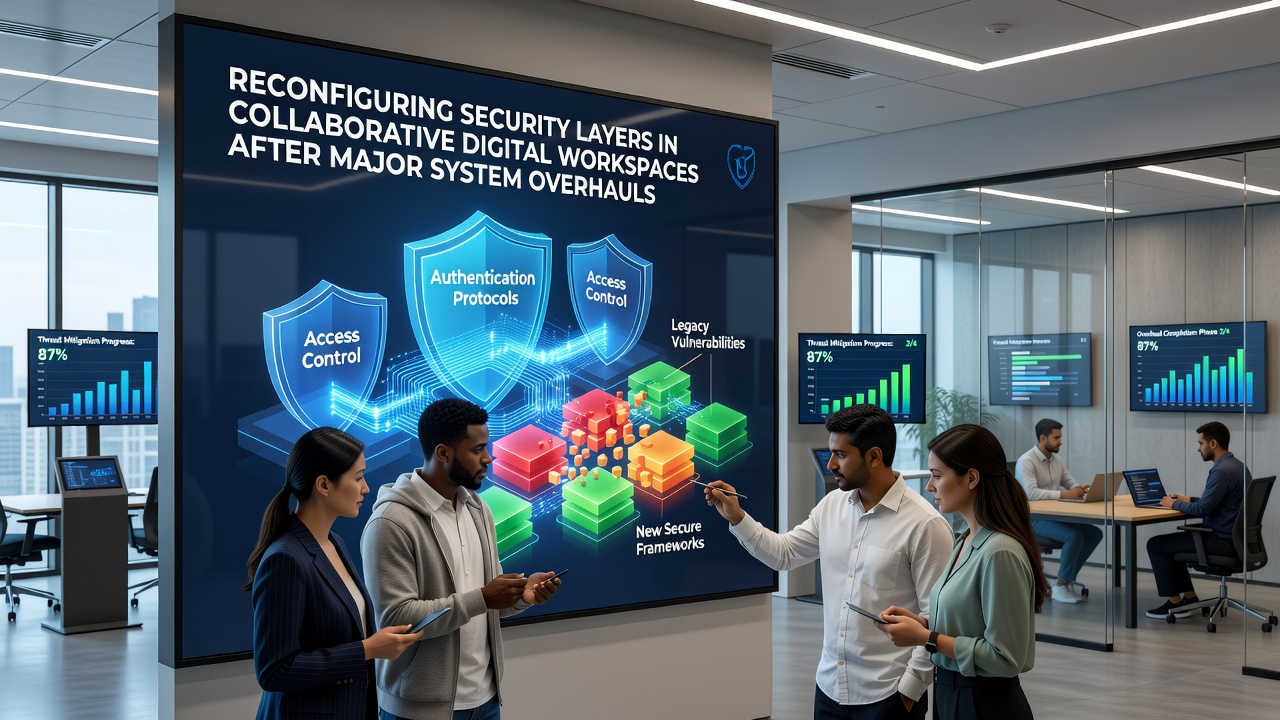
Segmentation practices also evolve at this stage, with administrators creating finer boundaries between project teams to prevent lateral movement in case of breaches. Evidence suggests that implementing micro-segmentation aligns well with updated workspace architectures, allowing granular control over which groups can view or modify specific files without disrupting overall collaboration flows. According to NIST guidelines, these adjustments integrate effectively when tested through simulated scenarios that replicate real user behaviors.
Monitoring and Compliance Adjustments
Continuous monitoring tools require recalibration following overhauls, since log formats and alert thresholds change with the new systems. Data shows that teams which synchronize these tools with revised security layers detect anomalies faster, particularly in shared environments where activity spikes occur during peak collaboration hours. Regulatory updates issued in September 2026 highlighted the value of automated compliance checks that verify adherence to data residency rules across different jurisdictions.
One study revealed that organizations incorporating feedback loops from monitoring outputs into their reconfiguration plans maintained higher uptime while strengthening defenses. Experts have observed that this iterative approach helps address emerging issues without requiring full system rollbacks.
Integration with External Frameworks
Frameworks from various international bodies provide structured approaches for these reconfigurations, and professionals often reference them when aligning internal policies with broader standards. ENISA reports outline methods for maintaining security continuity during transitions, focusing on risk assessments that account for collaborative features like shared calendars and integrated messaging. Those who've applied these methods find that documentation of each layer's dependencies proves essential for future audits.
Conclusion
Reconfiguring security layers after major system overhauls demands systematic evaluation of access controls, encryption methods, segmentation strategies, adn monitoring capabilities within collaborative digital workspaces. Organizations that follow established frameworks and incorporate regional regulatory updates from September 2026 onward position themselves to sustain secure operations while supporting ongoing team interactions. The process relies on data-driven adjustments that address the specific changes introduced by each overhaul, ensuring protections evolve alongside the workspace environment itself.